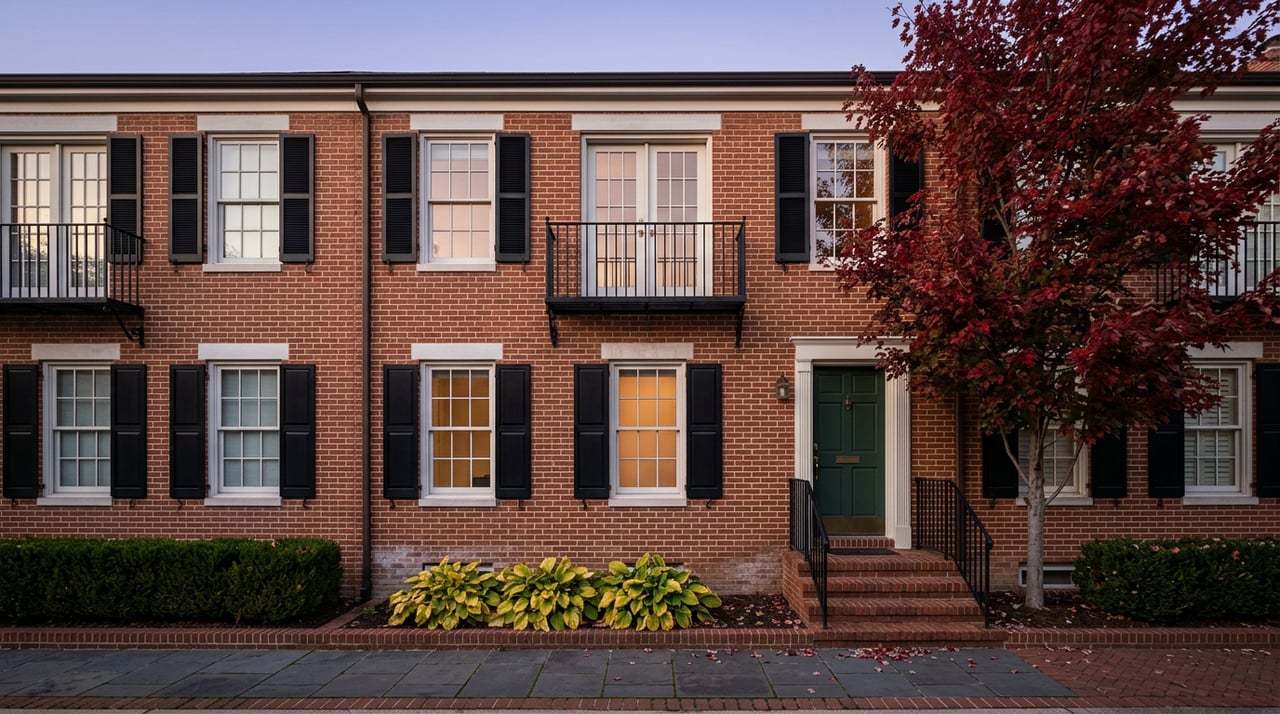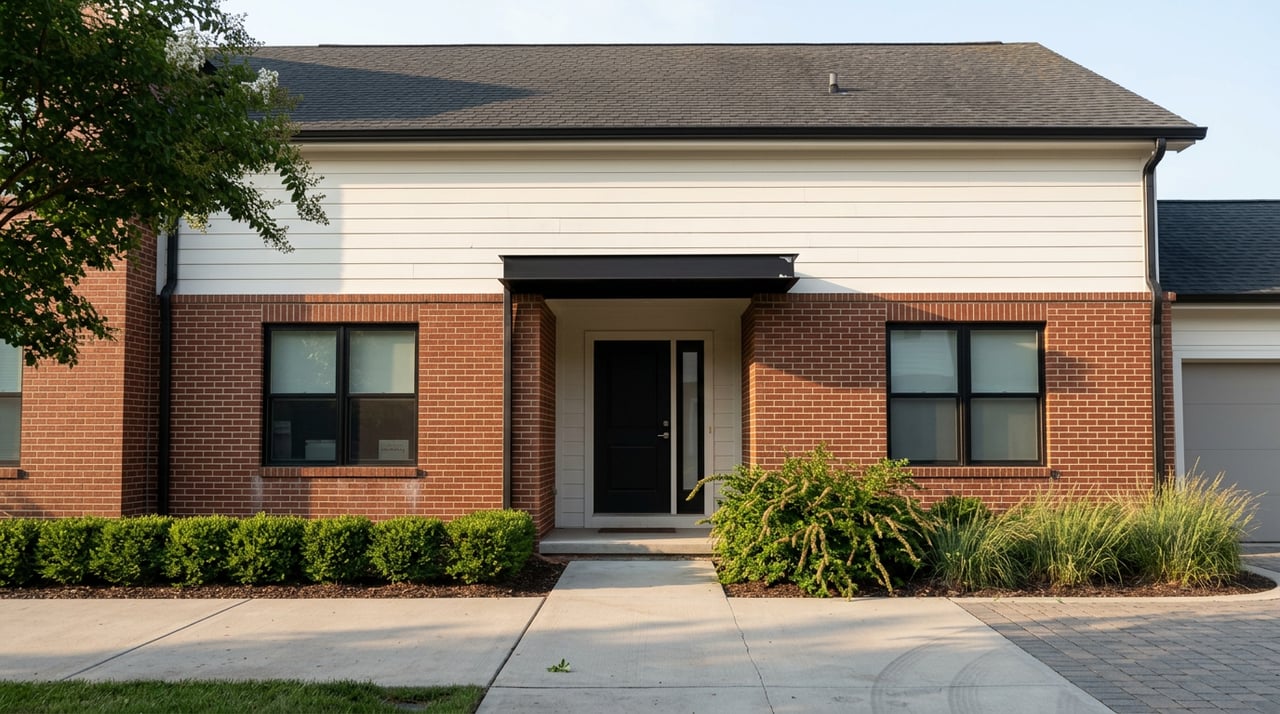
In February 2026, the Skokie Village Board sat through a contentious vote over a vacant lot at 4600 Main Street. The land had been owned for years by Arie Crown Hebrew Day School, which relocated to 7787 Gross Point Road in 2024 and agreed to sell once the school's move was final. The proposal on the table: 68 new homes, split between 24 two-bedroom and 44 three-bedroom townhomes, each with its own two-car garage. Mayor Ann Tennes told the board she would work with the developer "to make sure that the process is as painless as it can be." The vote passed 5-2, with Trustees Lissa Levy and Gail Schechter opposed, and the plan moved forward to a draft ordinance.
That single vote is a small piece of a much bigger story about what's happening to home values across Skokie right now, and it's a story that the median price alone won't tell you.
The number that doesn't add up
Anyone shopping Skokie's market in 2026 has run into a strange contradiction. Pull one set of closed-sales data covering the three months ending in May 2026, and the median sale price sits at $450,000, up 5.0 percent from a year earlier. But look at price per square foot over that same window and it tells a different story: $276, down 6.6 percent year over year. Prices are rising. The cost per square foot is falling. Those two numbers shouldn't move in opposite directions in a normal market, and the fact that they are is worth stopping on.
Pull a second data feed, this one built on InfoSparks, the closed-sale tracking platform Chicago-area agents use to pull MLS numbers, and detached single-family homes alone closed at a median of $512,000 in May 2026, up a much sharper 11.3 percent year over year. That's a third number, and it's not measuring the same thing as the first two.
A third measure, tracking a trailing twelve-month window across all property types, put the median closer to $415,000, up 9 percent from the prior twelve-month period.
Three medians. Three different answers. None of them wrong, exactly, because none of them are measuring the same basket of homes.
| Slice of the market | What's actually happening | The number |
|---|---|---|
| Detached homes only, InfoSparks-tracked closings | Tight inventory, steady multiple-offer competition on established housing stock | $512,000 median, up 11.3% year over year (May 2026) |
| All closed sales, three-month window | New attached product entering the mix pulls the per-square-foot figure down even as totals rise | $450,000 median, up 5.0% year over year; $276 per square foot, down 6.6% (three months ending May 2026) |
| All closed sales, trailing twelve months | Smooths out any single quarter's mix but still climbing | $415,000 median, up 9% from the prior twelve-month period |
The gap between these numbers isn't a data error. It's a mix shift, and the mix is shifting because of what's actually getting built.
Where the new supply is landing
New attached product typically closes at a lower price per square foot than a detached home of comparable finish. Shared walls and stacked units spread the land cost across more livable square footage per lot, so a well-built townhome can carry a solid sale price while still pulling the blended per-square-foot average down. That's the mechanical piece of what's happening in Skokie right now, and it's showing up in three places at once.
- 4600 Main Street. The 68 townhomes advanced by the Village Board in February 2026 will add a meaningful block of attached housing to a corridor that has historically been detached, single-lot ranch and split-level stock.
- 8047 Skokie Boulevard. This address sits inside the Village's own "Swift District" plan, a transit-oriented redevelopment corridor along Skokie Boulevard north of Oakton Street built around the CTA Oakton-Skokie Yellow Line stop, Downtown Skokie, and the Illinois Science + Technology Park. The Village's planning materials show a rendering for a 56-unit mixed-use residential building at that site, with construction described as expected to begin this winter.
- Oakton Street itself. Cook County is rebuilding the roadway between Skokie Boulevard and McCormick Boulevard through spring 2027, adding a center turn lane, bike lanes, and pedestrian improvements. That reconstruction runs through the same intersection anchoring the Swift District, so the corridor feeding these new units will look and function differently by the time they deliver.
None of this is happening in Skokie Highlands, the neighborhood of mid-century all-brick ranches and split-levels that continues to trade like a classic seller's market, with buyers competing for finished basements, updated kitchens, and double lots. That's the detached slice of the table above, still posting double-digit annual gains. The new supply is landing somewhere else entirely, closer to downtown, and it's attached rather than detached. Blend the two together in a single median and you get exactly the contradiction buyers are running into.
The transit bet nobody's pricing in yet
There's a second layer to the Swift District story that matters for anyone weighing a purchase near that corridor, and it's speculative rather than settled.
In her 2026 State of the Village address on May 8, Mayor Tennes confirmed what CBS Chicago described as "very preliminary conversations" with the Governor's office about extending the CTA Yellow Line north from its current Dempster Street terminus to the area near Westfield Old Orchard. Then, on June 17, 2026, CTA chief planning and innovation officer Molly Poppe gave the Village Board an update that tempered expectations further. According to reporting from The Record North Shore, Poppe said the agency is dusting off an old feasibility study, but that an actual extension would take years, "maybe even decades." She also disclosed that the Yellow Line carried 442,109 riders in 2025, down 46 percent from the 832,225 it carried in 2019, a decline she attributed in part to Skokie's high rate of remote work. Trustee Lissa Levy raised the idea of extending service specifically to serve the Old Orchard area and boost that ridership, but Poppe noted the CTA still has to work through basic questions like whether land exists for another station.
In other words, developers are building toward a transit corridor whose biggest long-term upgrade is not funded, not scheduled, and by the CTA's own account, potentially decades away. That's not a reason to avoid the area. It's a reason to be precise about what you're paying for today versus what you might be speculating on for a future that isn't guaranteed to arrive on any particular timeline.
What this actually means if you're comparing homes here
If you're looking at a detached home in an established Skokie neighborhood, you're competing in the market that produced that 11.3 percent year-over-year jump. Multiple offers and quick closings are the norm there, and the per-square-foot discount showing up village-wide isn't reaching those listings.
If you're looking at a new or resale townhome near downtown or inside the Swift District footprint, you're buying into the blended, lower per-square-foot number, and part of what you're paying for is proximity to a transit stop whose long-term upgrade path is still an open question rather than a settled plan.
Neither position is wrong. But treating Skokie as a single market with one median price is the mistake. The right question isn't "what's the median home price in Skokie right now." It's "which slice of Skokie is this specific home actually part of, and what's driving that slice."
FAQ
Does a lower price per square foot mean Skokie homes are getting cheaper? No. The village-wide median price is still rising. The per-square-foot figure is falling because more of the closed sales are attached homes, which carry a different cost structure than detached houses even when both are appreciating.
Should I wait for the Yellow Line extension before buying near downtown Skokie? Based on what CTA and Village officials have said publicly, waiting for a funded, scheduled extension could mean waiting a very long time. The area's fundamentals, its proximity to the existing Oakton-Skokie stop and the Illinois Science + Technology Park, stand on their own regardless of what happens with any future extension.
What exactly is the Swift District? It's the Village of Skokie's own name for the redevelopment corridor along Skokie Boulevard north of Oakton Street, built around the existing CTA Yellow Line stop. The 56-unit building planned for 8047 Skokie Boulevard is one piece of that plan.
If you're trying to figure out which slice of Skokie's market a specific home actually belongs to, or what a property near the Swift District or Skokie Highlands is really worth given everything above, Summerville Partners can walk you through the comparison street by street. Request a free home valuation and get a read on where your property sits before you make a move.