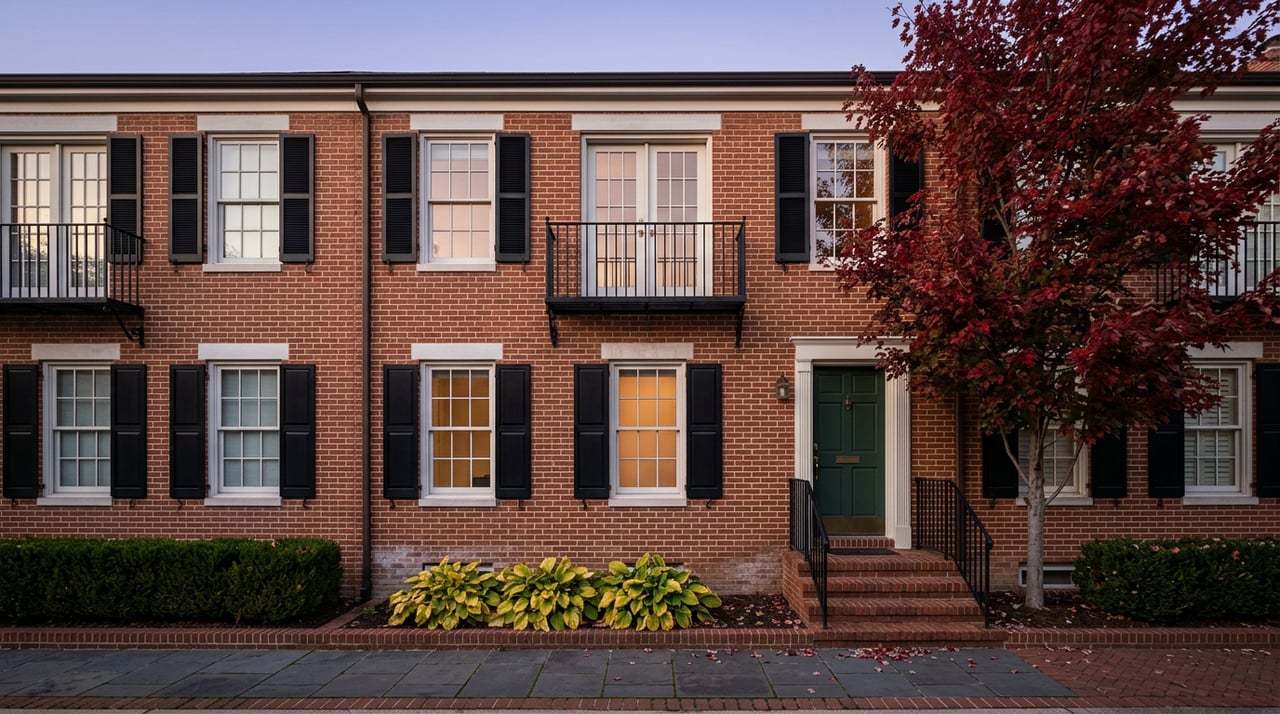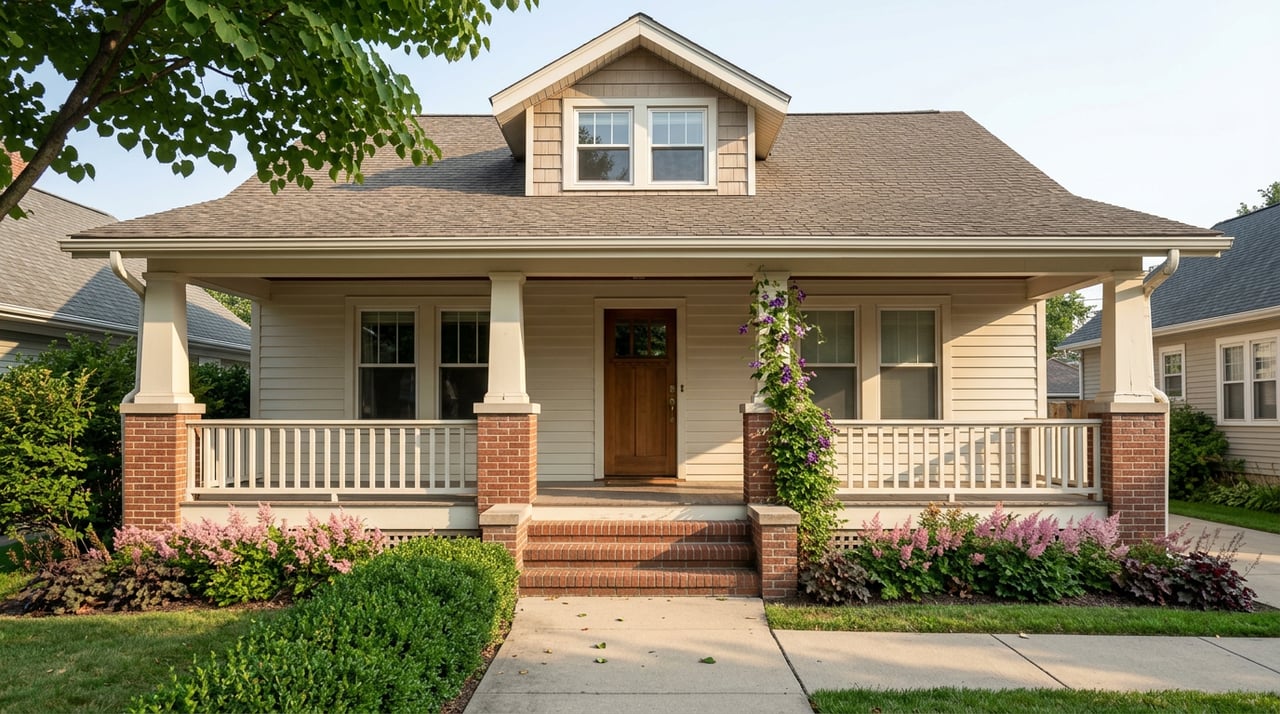
Walk two showings in Edgewater on the same Saturday this spring and you'd think you were touring two different cities. In Edgewater Glen, a four-square with original millwork and a wraparound porch gets four offers in the first weekend and closes above ask in under a month. Ten minutes east on Sheridan Road, a one-bedroom with a lake view sits through a price cut, a mortgage that almost fell apart over building paperwork, and a closing that took more than two months. Both addresses say Edgewater. Neither experience resembles the neighborhood's headline number.
That headline number is the puzzle worth unpacking. In February 2026, Edgewater's median sale price came in at $268,000, down 12.1 percent from the year before. Read on its own, that sounds like a neighborhood cooling off. But look at the two sub-markets driving that median and the story flips: Edgewater Glen's home prices rose 58 percent year over year to a $725,000 median over the three months ending in March 2026, selling in an average of 22 days. Edgewater Beach, the lakefront high-rise corridor, rose too, up 8.7 percent to a $224,000 median, though it took 67 days to sell. Every visible sub-market went up. The blended number went down.
That is not a contradiction. It is a composition problem, and understanding it is the difference between pricing a listing correctly and guessing.
The math that makes a falling median compatible with rising prices
Here is the detail that resolves it: Edgewater's median sale price per square foot actually rose 1.6 percent over the same period the median sale price fell 12.1 percent. A neighborhood does not get cheaper per square foot while getting cheaper overall unless the mix of what is selling has shifted toward smaller, lower-priced units. That is exactly what happened. Condo volume along the lakefront outweighed the smaller number of larger, higher-priced single-family sales inland, and because a median tracks the middle of whatever closed that month, not the value of any specific property, it moved with the mix rather than with value.
This isn't a slowdown story. Transaction counts back that up: 145 homes sold in Edgewater in February 2026, up from 133 the year before. More closings happened, not fewer. They were simply concentrated in a different part of the housing stock than the year before, and that part carries a structurally lower price.
Zoom into the sub-areas and the gap becomes concrete.
| Area | Median sale price | Year-over-year change | Median days on market |
|---|---|---|---|
| Edgewater, all housing types | $268,000 (Feb. 2026) | down 12.1% | 66 days |
| Edgewater Glen | $725,000 (three months ending March 2026) | up 58.0% | 22 days |
| Edgewater Beach | $224,000 (three months ending March 2026) | up 8.7% | 67 days |
As of late July 2026, the neighborhood's median condo listing price sat at $269,000, with homes receiving an average of four offers within 42 days, a snapshot that lines up with the broader story: entry-level condo demand is real and fast-moving, it just isn't pulling the same dollar amounts as the inland single-family stock.
What changed on the Glen side
The mechanism behind Edgewater Glen's run is dated and specific. The neighborhood, a pocket of early 20th century Foursquare, Prairie, Queen Anne and Craftsman homes roughly bounded by Hood to Granville and Norwood, and Broadway to Clark, was added to the National Register of Historic Places on December 30, 2024. That listing does not restrict what an owner can do to their home with private funds, and it does not trigger a design review unless the city later creates a local landmark district or federal money enters the project. What it does unlock is a set of financial incentives: a property tax assessment freeze and reimbursement for qualified restoration costs on historic properties, administered through state preservation channels, according to the Edgewater Glen Association, which also runs the Garden Walk and other events that have kept the district's identity visible to buyers looking specifically for that kind of house.
For a renovation-minded buyer weighing a century-old home against new construction elsewhere, a tax freeze on assessed value changes the math on restoring original hardwood floors and built-ins rather than gutting them. That's a real financial lever, not a marketing one, and it helps explain why homes here are selling in 22 days at prices that have jumped 58 percent in a year.
What's holding the lakefront corridor back
The other half of the story lives in the buildings along Sheridan Road, and it's less about desirability than about paperwork and reserves.
Two frictions show up repeatedly in lakefront condo transactions here. The first is financing. As of 2026, roughly 35 percent of Chicago condo buildings carry active FHA approval, and older buildings in parts of Edgewater frequently lack it because of deferred maintenance or low owner-occupancy ratios. If a buyer is counting on an FHA loan and the building isn't approved, that discovery can happen well into a search, not before it, and it can eliminate a chunk of the buyer pool for that unit.
The second is special assessments. Lakefront mid-rises face more exposure to wind-driven rain and corrosion than inland buildings, which pushes up the cost of exterior envelope, balcony, and elevator work when it comes due. A simple example illustrates the exposure: a $600,000 façade and balcony assessment split across a building where your unit carries a 1.25 percent ownership share works out to a $7,500 bill, on top of whatever monthly assessment you're already paying. Typical Chicago condo assessments run $250 to $800 a month, but full-amenity towers with doormen, pools, and fitness centers can push past $1,000.
Edgewater's lakefront corridor spans a wide range of building ages carrying exactly this kind of risk. The Edgewater Beach Apartments at 5555 N. Sheridan, the Beaux-Arts tower known locally as the Pink Building, dates to 1931. Malibu East and East Point Condominiums, both fixtures of the Sheridan Road skyline, went up in the 1960s and 70s. Buildings of that vintage are due, or overdue, for major systems work, and a pending or recently levied assessment shows up in the price a buyer is willing to pay long before it shows up in any headline statistic.
What this means if you're pricing a sale or writing an offer here
If you're listing an Edgewater Glen property, the historic designation and its financial incentives are worth foregrounding in your marketing rather than treating them as a footnote. Buyers drawn to restoration are actively searching for exactly that story right now.
If you're evaluating a lakefront condo, treat the building's paperwork as part of the price discovery, not a formality to handle after you're under contract. Before you write an offer, ask for:
- The current reserve study and how recently it was updated
- Special assessment history for the past five years, and whether any assessment is pending or under discussion
- The building's FHA approval status if you're financing with an FHA loan
- What the monthly assessment actually includes, since heat, water, and cable coverage varies widely between buildings and changes the real cost of ownership
None of that shows up in a median. All of it shows up in what you actually pay.
A short FAQ
Does the National Register listing restrict what I can do to my Edgewater Glen home? No. National Register status does not by itself limit renovation or demolition when a project uses private funds. Restrictions would only apply if the city later creates a local landmark district for the area or if federal funding or permits are involved in the project.
How do I check if a specific Edgewater condo building has FHA approval? Ask your lender or agent to check the building against the current FHA-approved condo list before you fall in love with a unit. It's a five-minute check that can save weeks of financing delays.
Are special assessments something I can negotiate at closing? Yes, in many cases. Buyers can ask sellers to cover all or part of a known assessment, or to escrow funds for one that's pending. Your attorney should confirm the details through the building's estoppel letter during Illinois's standard attorney review period.
Edgewater's median will keep moving as the mix of what's selling shifts month to month. What won't change is that the number on a portal page can't tell you whether you're buying into a tax-advantaged restoration market or a building with a facade project on the horizon. That distinction is where local knowledge earns its keep.
If you're weighing a purchase or a sale anywhere in Edgewater, from a Foursquare on Kenmore to a high-floor unit on Sheridan, Summerville Partners can walk you through what a specific building or block is actually doing right now. Request a free home valuation and we'll show you the numbers behind the number.